

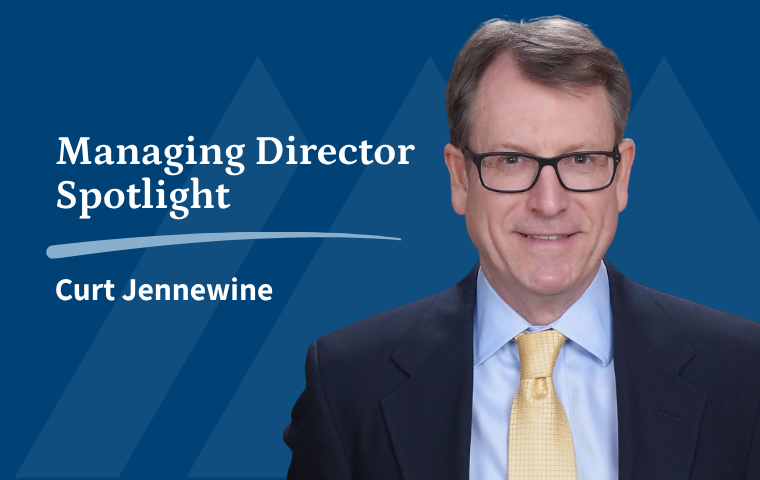
Meet Curt Jennewine: From Kyoto to Kinsella Group, a MedTech M&A Journey
Meet Curt Jennewine – with a career spanning marketing roles in Asia, Europe, and the US, executive product development at Guidant and Abbott, and over 15 years in orthopedics including his time at Zimmer, Curt Jennewine has built a rare vantage point on the industry—one that now inspires his work advising MedTech companies on buy-side and sell-side M&A at Kinsella Group. In this conversation, he shares how more than a decade living and working across Asia and Europe shaped his approach to cross-cultural deal-making, walks us through a current engagement in the vascular closure space, and reveals some commonalities between deal-making and triathlons.
- How did your MedTech career evolve?
Like the careers of many folks in the industry, my trajectory was non-linear. I started in an entry-level Marketing role and continued to where I am now, advising MedTech companies on their buy-side and sell-side M&A transactions. Each of the varied roles I had along the way contributed to the knowledge and experience that strengthen the advisory work I do today.
My first job in MedTech was working for a traditional, family-owned company based in Kyoto, Japan. I was responsible for building and managing their European distribution network. After a few years, I returned to the U.S. for business school, attending the Kellogg School of Management.
Although I worked in strategic consulting between first and second years of school, my heart was in medical technology and so I took a job with Guidant Corporation following graduation. Being able to speak Japanese led Guidant to transfer me to Japan for another six years where I led strategy development and execution through roles in Marketing, Strategy and Sales.
With Guidant’s acquisition by Abbott/Boston Scientific, I returned to the U.S. in an executive product development role at Abbott, helping build the foundation for the artificial pancreas. A few years later I was recruited to lead Global Marketing for Zimmer’s Trauma Division, which resulted in a 15+ year career in Orthopedics.
Eight years ago, I found a way to integrate these disparate geographical, functional and clinical experiences through the work I do at Kinsella Group. At Kinsella Group I advise a variety of MedTech clients that seek to grow their businesses through acquisition or wish to sell a product line or business.
- You lived and worked in Asia and Europe for more than 13 years. Could you share a few of your learnings related to how culture and collaboration impact successful deal-making?
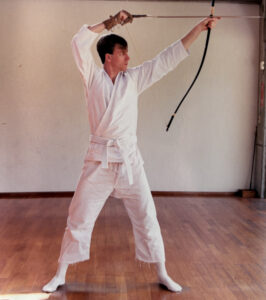 My international experience includes a year of high school in Hong Kong, a university semester in Germany, two months of language study in China and over ten years of working in Japan. What I’ve learned from these experiences is that careful listening, respectfulness and observance of non-verbal cues go far in identifying cultural nuances and avoiding intercultural problems.
A couple of examples that may be of interest include differences I’ve observed in how Chinese and Japanese parties make deals. In China, one needs to be prepared to move quickly and exhibit strong, continued interest in a deal. The passion one exhibits helps maintain the focus and drive necessary to complete a transaction. “Strike while the iron is hot!” is as popular an expression in China as it is in the U.S.
In contrast, one needs to be equally prepared in Japan for deals to move slowly. In Japan decision-making involves careful consideration of most every outcome as well as ‘nemawashi’, a process for individually meeting with stakeholders to gather feedback and build consensus prior to a formal discussion or decision. And yet, despite this slowness, the process in Japan must still move through each step smoothly or one runs the risk of the Japanese party walking away if they sense ‘en ga nai’ (meaning that it just ‘isn’t ordained to be’).
- How did you connect with Kinsella Group and what is your role within the organization?
Bob Kinsella and I met when I ran global sales at Acumed and he was shopping us an acquisition opportunity. Although most of Bob’s transactions had historically been with contract manufacturers, he was looking to grow the work Kinsella Group does with finished-product companies. I knew I could bring that type of branded product company experience to the firm.
About half of my projects at Kinsella Group have been on the buy-side and half on the sell-side, with a bit of capital raise work mixed in. Although somewhat of the resident expert for finished-product clients, I work on contract manufacturing projects as well.
Speaking geographically, with Kinsella Group team members in Seattle, San Francisco, Chicago, Naples (FL), New York, Boston and London, I hold down the fort in Seattle.
- Have you worked on any interesting projects recently, or do you have any right now?
Yes, I always seem to be working on something interesting!
A few months ago, I helped a client sell their surgical instrumentation business to an international strategic. Both parties were pleased with the transaction, which always makes me feel good as an advisor!
Currently, I’m working on two sell-side engagements. One involves the divestment of my client’s vascular closure business. Their patented and clinically-proven technology is of particular interest to players in the electrophysiology and vascular intervention spaces because it offers significant advantages over the current standard of care, including: faster/easier deployment, fewer adverse events, improved effectiveness for large-bore access sites, and significantly lower cost. My client’s product would provide an outstanding door-opener for any company wishing to capture meaningful share in the $1.5B+ vascular closure market.
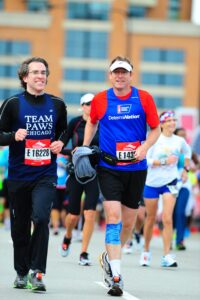
- You are a triathlete – What has been your most challenging race thus far? Do you see any commonalities between triathlons and M&A?Yes, there are definitely commonalities – preparing well, executing intelligently, and persevering when the going gets tough are just as important in triathlons as in deal-making. As for my most challenging race, it had to be the 70.3 Tri in Napa – lots of hills, and even more great wineries I biked by without stopping. And as a Jennewine, you can bet that skipping all that wine took a great deal of perseverance!
Learn more about Curt Jennewine here.
